Does Your Marketing Need a Boost?
These No-Cost Trainings Will Upgrade Your Strategy so you can scale IN-HOUSE
(So You're Not handcuffed to Unreliable marketing agencies)
These No-Cost Trainings Will Upgrade Your Strategy so you can scale IN-HOUSE!
(So You're Not handcuffed to Unreliable marketing agencies)
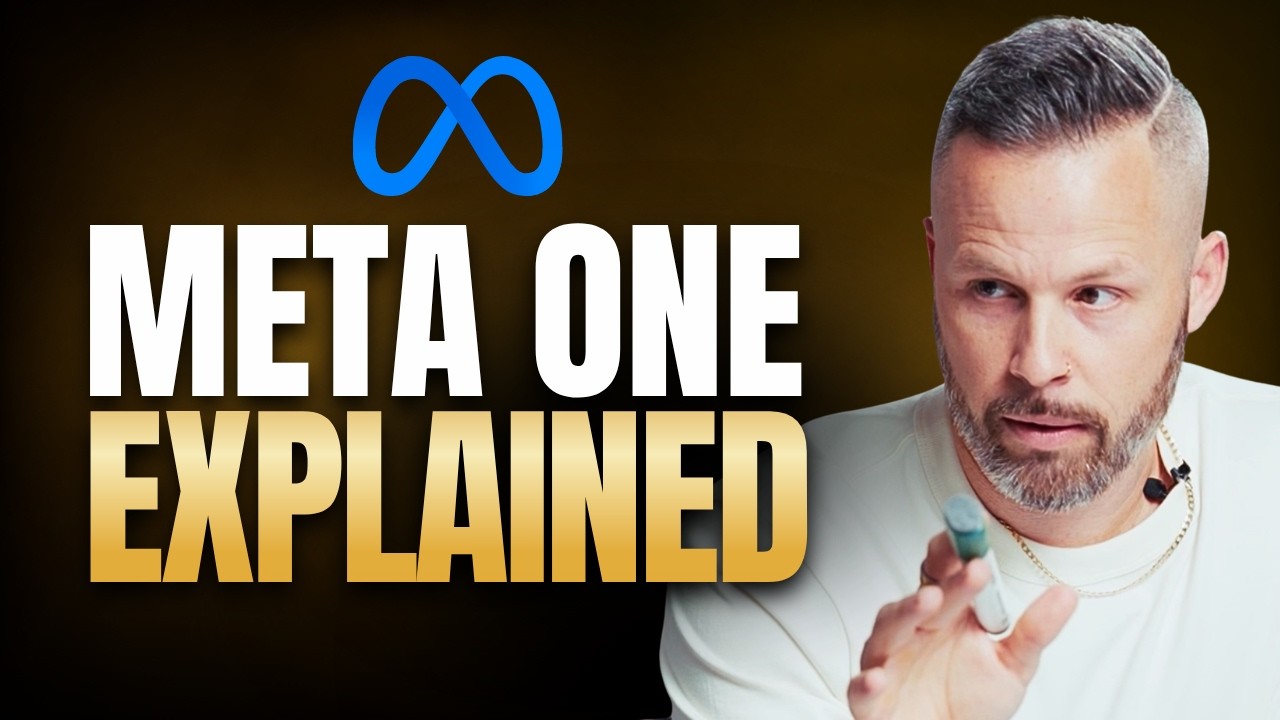
Facebook Just Put A Price Tag On Organic Reach
For years, Facebook and Instagram have been some of the most powerful platforms for businesses looking to build an audience organically.
You could create content, publish consistently, grow your following, and reach potential customers without paying for every impression.
But that model has been changing.
According to the video, organic reach has steadily declined, making it increasingly difficult for businesses to reach even the audiences they have already built. The speaker argues that Meta's newer paid business offerings could signal an even bigger shift toward businesses paying for visibility.
For business owners, coaches, consultants, and experts who have built their businesses primarily through organic content, this raises an important question:
What happens when organic visibility is no longer enough to grow your business?
The answer may be less about abandoning organic content and more about building a predictable visibility strategy that includes paid advertising.
The Decline of Organic Reach
One of the biggest challenges for businesses on social media is that having followers does not necessarily mean those followers will see your content.
The video points to a dramatic decline in organic reach over the years. It cites an estimated Instagram organic reach rate of around 50% in 2016, approximately 15% around 2020, and about 5% in 2026.
In practical terms, the argument is simple:
You can have an audience and still struggle to reach that audience.
That can create a frustrating cycle for business owners.
You create content.
You post consistently.
You spend hours producing videos, graphics, captions, and educational material.
But the number of people actually seeing that content may remain small.
This helps explain why some businesses feel as though they are constantly posting without seeing corresponding business growth.
Organic content can still be valuable, but the distribution of that content has become a major challenge.
What Meta's Paid Business Subscription Could Mean
The video discusses Meta's paid business subscription, referred to in the video as "Meta Verified for businesses," with multiple pricing tiers.
Rather than focusing on every feature, the speaker highlights two features in particular:
Optimized search
Featured in Facebook feed
The argument is that these features are especially important because they relate directly to visibility and discoverability.
If businesses can pay for features that potentially improve how often their content or profiles are discovered, this could represent another step toward a social media environment where visibility increasingly has a price attached to it.
The video points out that the feature describing feed placement is presented as an opportunity to be featured rather than a guaranteed placement.
That distinction matters.
Businesses may pay for access to a feature without necessarily knowing exactly how often their content will be promoted or how much additional reach it will generate.
This leads to a bigger strategic question:
If you're going to pay for visibility, shouldn't you have as much control and measurement as possible?
Visibility Is Becoming a Business Requirement
One of the central ideas in the video is that being good at what you do is only part of the equation.
You also need people to know that you exist.
The speaker summarizes this concept with the idea that:
Visibility beats ability.
There are countless talented professionals and businesses that struggle financially despite having excellent products or services.
Why?
Because being excellent does not automatically create awareness.
The video uses McDonald's as an example. McDonald's does not need to have the best hamburger in the world to dominate the global burger market.
Its advantage is recognition, distribution, marketing, and visibility.
The broader lesson for business owners is this:
The best product does not always win. The product people know about has a much better chance of winning.
The Problem With Relying Only on Organic Content
Organic content is still useful.
It can build trust, demonstrate expertise, educate an audience, and strengthen a brand.
The problem is relying on it as your only source of visibility.
If your reach continues to decline, your business becomes increasingly dependent on algorithms deciding who sees your content.
That creates uncertainty.
You may have thousands of followers but only a small percentage of them may see an individual post.
You may create a great video that reaches very few people.
And you may have no reliable way to force that content in front of a specific audience.
This is where paid advertising becomes attractive.
Why Paid Advertising Gives Businesses More Control
The speaker's main recommendation is not simply to spend more money on Meta.
It is to learn how to use paid advertising strategically.
Compared with relying on an algorithm to organically distribute content, paid advertising gives businesses greater control over several important variables.
1. You Choose the Audience
With paid advertising, you can define who you want to reach based on the targeting options available within the platform.
Instead of hoping the algorithm finds the right people, you can build campaigns around a specific audience and business objective.
2. You Control the Destination
Paid campaigns allow you to determine where you want to send people.
That could be a landing page, webinar registration, lead form, sales page, booking page, or another destination.
3. You Control the Call to Action
You can structure the ad around a specific action you want the prospect to take.
Instead of simply publishing content and hoping someone responds, you can design the campaign around a measurable next step.
4. You Can Measure Performance
One of the biggest advantages of paid advertising is the amount of performance data available.
Businesses can evaluate campaign performance and make decisions based on actual results.
That allows you to identify what is working, what is not working, and where your advertising budget should go next.
5. You Can Scale
When a campaign is producing profitable results, you have the ability to increase investment and attempt to generate more results.
That creates a much more deliberate approach to visibility.
A Real-World Example: Graham Cochran
The video shares the example of business coach Graham Cochran.
According to the speaker, Graham had built his business for more than 16 years and had historically generated significant results through organic content without relying heavily on paid advertising.
But as organic reach became more difficult, reaching his audience became increasingly challenging.
His goal was to create a more predictable way to fill live events and challenges, sell books, and generate customers.
The RFA team installed an advertising system into his business, developed scripts, and trained his team.
According to the speaker, Graham began generating paying customers from the ads within a week.
The speaker is careful to point out that this result should not be treated as a guarantee for every business. Graham was described as an experienced entrepreneur and a strong student who implemented the strategy correctly.
That distinction is important.
Facebook advertising can be powerful, but poor implementation can also waste money.
Paid Advertising Is Not Automatically Profitable
One of the strongest warnings in the video is that advertising only works when it is implemented correctly.
Simply putting money into Facebook ads does not guarantee sales.
Businesses can waste significant amounts of money when campaigns are poorly structured, targeting is wrong, messaging is weak, or the overall customer journey does not make sense.
That is why the goal should not be:
"How much should I spend on ads?"
The better question is:
"What return can this investment produce?"
Stop Asking "Is This Fair?" and Start Asking "Is This Profitable?"
The video takes this idea beyond advertising.
When Meta changes its platform or introduces new paid features, business owners may understandably feel frustrated.
After all, many businesses built their audiences on these platforms expecting organic distribution to remain available.
But the speaker recommends approaching the situation from a business perspective rather than an emotional one.
Instead of asking:
"Is this fair?"
Ask:
"Is this profitable for me?"
That shift changes how you evaluate business decisions.
A cost by itself does not tell you whether something is a good investment.
You need to consider the value it produces.
For example, a marketing expense may be worthwhile if it:
Generates qualified leads
Produces customers
Saves your team time
Creates predictable visibility
Reduces uncertainty
Allows you to scale
Produces a measurable return
The goal is not to avoid spending money.
The goal is to spend money intelligently.
Cost vs. Value in Business
Business owners can easily become focused on price.
"How much does it cost?"
"Can I get it cheaper?"
"Why should I have to pay for this?"
Those questions are understandable, but they are incomplete.
A better evaluation considers both cost and value.
If spending $1,000 produces $5,000 in profitable revenue, the cost needs to be evaluated differently than if the same $1,000 produces nothing.
Likewise, paying for a tool, service, or advertising system may make sense if it saves substantial time or helps reduce costly mistakes.
This is particularly relevant to advertising.
The question should not simply be whether Facebook ads cost money.
They obviously do.
The question is whether the advertising system can generate enough value to justify the investment.
What Business Owners Should Do Next
If your business has relied primarily on organic Facebook and Instagram content, now is a good time to evaluate your visibility strategy.
Start by asking yourself:
Are You Reaching Enough People?
Look at your current content performance.
How many people are actually seeing your posts?
How many are engaging?
More importantly, how many are becoming leads or customers?
Are You Dependent on Organic Reach?
If your entire marketing strategy depends on people naturally discovering your content, you have limited control over distribution.
Consider whether you need another channel for reaching your target market.
Can You Measure Your Marketing?
A strong marketing system should give you enough information to make informed decisions.
You should know what you are spending and what results that investment is producing.
Are You Ready to Learn Paid Advertising?
If you're not running ads yet, start learning.
If you're already running ads, focus on improving your strategy, creative, targeting, tracking, and overall campaign performance.
Paid advertising is not something to approach casually. But learning the fundamentals can give your business another powerful way to generate visibility.
The Future of Social Media Marketing Is About Predictable Visibility
The bigger lesson isn't necessarily that organic content is dead.
Organic content still has a role.
The bigger shift is that businesses may no longer be able to depend on organic distribution alone.
As social platforms evolve, the ability to consistently reach new people becomes increasingly valuable.
And when visibility becomes difficult to obtain organically, paid distribution becomes more important.
Businesses that understand this shift can begin building marketing systems designed around predictable visibility rather than hoping an algorithm rewards every post.
That means combining strong content with a deliberate advertising strategy.
The Big Takeaway
Facebook and Instagram have changed dramatically over the years.
Organic reach has declined, audiences have become harder to reach, and Meta continues to introduce products and features that give businesses additional ways to pay for visibility.
Whether you choose Meta's paid business subscription, traditional Facebook advertising, or another marketing channel, the underlying business principle remains the same:
Visibility matters.
Having an excellent product or being exceptionally good at what you do is not enough if the right people never discover you.
Instead of asking whether changes to social media are fair, business owners should ask whether a particular investment is profitable, measurable, and valuable.
If organic reach is becoming less predictable, learning how to generate paid visibility could become one of the most important marketing skills for your business.
And the businesses that take action while others are still complaining about the algorithm may have the advantage.
Your Next Step
If you're ready to stop relying entirely on organic reach and build a more predictable system for generating visibility and customers, start learning how paid advertising can work for your business.
If you're an experienced business owner who wants help installing a paid advertising system and reducing the risk of figuring everything out alone, consider applying for the coaching program mentioned in the video.
The goal isn't simply to spend money on ads.
The goal is to build a marketing system that produces measurable business results.
Want Help Learning Ads or Building Systems?
7 Step Blueprint To Launching Your First Facebook Ad 👇
https://www.richfromanywhere.com/7-step-blueprint
Attend The Profitable Ads Workshop 👇
https://profitableadsworkshop.com
The Most POWERFUL (And Simple) Facebook/Instagram Ads Course In The Game👇
https://www.richfromanywhere.com/accelerator
⭐️Money Back Guarantee Included⭐️
Apply To Work With RFA Directly👇
https://www.richfromanywhere.com/coaching
► Learn more about "Rich From Anywhere"
Website: https://www.richfromanywhere.com
Instagram: https://www.instagram.com/richfromanywhere
Tiktok: https://www.tiktok.com/@richfromanywhere
Direct Email: support@richfromanywhere.com
► Who Is Rich From Anywhere
RFA is your virtual marketing team that cares about the growth of your business just as much as you do. After 10 years of media buying, marketing for 7‑figure companies, and running our own online businesses, we've discovered a very specific marketing formula that produces results over and over again. We call it the RFA Method. Our proprietary RFA Method has already helped hundreds of online businesses, influencers, coaches, and educators grow their business and live a life of freedom doing what they love. Our passion is giving business owners the marketing tools they need to reach more people, make more sales, and as a result, change their life.


Rich From Anywhere, Inc. ™
© 2026 - All Rights Reserved