
Does Your Marketing Need a Boost?
These No-Cost Trainings Will Upgrade Your Strategy so you can scale IN-HOUSE
(So You're Not handcuffed to Unreliable marketing agencies)
These No-Cost Trainings Will Upgrade Your Strategy so you can scale IN-HOUSE!
(So You're Not handcuffed to Unreliable marketing agencies)
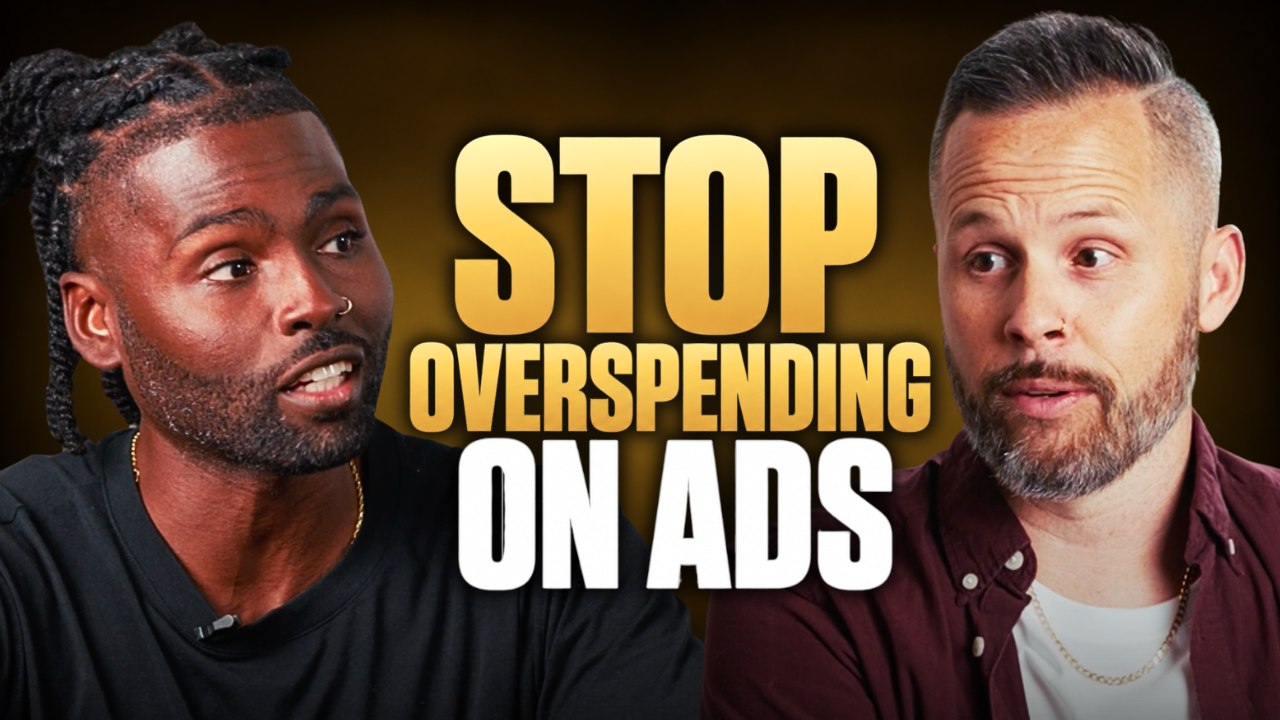
How Much Should You Spend on Meta Ads?
It is one of the most common questions business owners ask, whether they are brand new to advertising or already running a successful business but have never used paid traffic before.
The problem is that there is a lot of bad advice online. Some people claim you need to spend hundreds or even thousands of dollars per day to see results. But that is not true for every business, and for beginners, it can be a costly mistake.
The smarter approach is to start with a budget that helps you gather data, understand your audience, test your messaging, and avoid burning through money before you know what is working.
You Do Not Need a Huge Budget to Start Meta Ads
One of the biggest myths about Meta ads is that you need a massive daily budget to get results.
You do not.
In fact, if you are just getting started, testing a new product, launching a new offer, or running ads for the first time, it is usually better to start with a low budget.
A practical starting point is around $10 to $20 per day.
That may not sound like much, but it is enough to let the Meta algorithm begin testing your offer, messaging, creative, and audience. The purpose of the first few days is not always to make a huge return immediately. It is to collect useful data.
With the right structure, even a small test can show you whether your ad has potential.
Why Starting Small Protects You From Expensive Mistakes
When you are new to Meta ads, it is easy to make mistakes.
You might use the wrong creative. You might boost posts instead of setting up campaigns correctly. You might target the wrong audience. You might spend too much before understanding what the metrics are telling you.
That is why starting with $10 to $20 per day can be so valuable. It gives you enough room to test without risking hundreds or thousands of dollars too quickly.
In the video, the speakers shared that when they first started running ads, they spent $5,000 and made zero dollars back. They were spending around $100 per day while doing things incorrectly.
That is exactly why beginners should avoid jumping straight into large daily budgets.
A small budget gives you time to learn, test, adjust, and relaunch without making every mistake expensive.
What Happens During the First Few Days of Testing?
When you launch an ad, Meta begins sending traffic and collecting data. Over the first few days, you can start to see important signals.
These signals help answer questions like:
Is the ad getting attention?
Are people clicking?
Is the offer resonating?
Are leads coming in?
Is the cost per lead reasonable?
Is the ad showing signs of future performance?
The speakers mentioned that with the right formulas, they can often tell within about three days whether an ad has the potential to work.
If the ad is not performing, that does not always mean the whole offer is bad. It may simply mean something needs to change, such as the creative, messaging, targeting, or campaign structure.
When Should You Increase Your Meta Ads Budget?
Once an ad shows signs of potential, the next step is not always to immediately increase the budget.
A better approach is to let the ad continue running for around a week to confirm that the performance is stable. This gives you more confidence that the results are not just a temporary spike.
After that, you can begin scaling gradually.
A common scaling approach is to increase the budget by around 15% to 20% at a time. This helps avoid shocking the algorithm or causing performance to become unstable.
For example, if you are spending $20 per day, you might gradually increase rather than jumping immediately to $100 or $200 per day.
Can bigger jumps work? Sometimes. The speakers acknowledged that ads can be unpredictable. There are cases where increasing from $50 to $100 per day works fine. But there are also cases where a big increase causes performance to fall apart.
That is why testing and monitoring are so important.
Higher Budgets Can Speed Up Testing
A small budget is usually best for beginners, but established business owners may choose to test faster.
If you already have money available and you understand how to read the metrics, spending more can help you collect data faster.
For example, instead of spending $20 per day and waiting a few days to evaluate performance, a business might spend $100 per day and get a clearer read much sooner.
But there is a major caution here: higher budgets only make sense if you know when to turn an ad off.
The danger is letting a bad ad run day after day simply because you are hoping it will improve. If the metrics are already showing that the ad is not going to work, continuing to spend money only increases the loss.
How to Scale Meta Ads Without Breaking Performance
There are several ways to scale a campaign once it is working.
The first method is simple: increase the campaign budget gradually inside the existing campaign.
The second method is duplicating a winning ad and launching it again.
The third, more advanced strategy mentioned in the video, is using a separate ad account for a higher-budget version of the campaign. The speakers explained that ad accounts can become “trained” around certain spending levels. If an account has been spending $20 per day for months, jumping to $100 or $500 per day may cause instability.
That does not mean every business needs multiple ad accounts. It is an advanced tactic. For most advertisers, the first step is to scale carefully, monitor performance, and avoid making sudden budget changes without a reason.
Why Ads Sometimes Stop Working After Scaling
One common issue business owners face is this: the ad works at a lower budget, but once they scale to a higher budget, performance drops.
In the video, the speakers shared an example of students who could scale to around $200 per day, but every time they hit that level, the ad stopped performing.
One of the first things to check in that situation is creative fatigue.
Creative fatigue happens when the same audience has seen the same ad too many times. When people get tired of seeing the same creative, they stop clicking. That causes the click-through rate to drop, which can hurt overall performance.
Watch Your Frequency Metric
A key metric to monitor is frequency.
Frequency tells you how many times, on average, people have seen your ad. If your frequency climbs above two and performance starts falling, your audience may be seeing the same ad too often.
When that happens, the solution is usually not just to increase the budget again. The better move is to create fresh creative.
That could mean:
New videos
New hooks
New messaging angles
New styles of content
New examples
New ways of calling out the audience
Fresh creative gives Meta more ways to find new pockets of your audience.
Messaging Is the New Targeting
One of the most important ideas from the video is that messaging is the new targeting.
Even if your audience size shows millions of people, Meta may only serve your ad to a small segment of that audience based on the words, angles, and creative you use.
The speakers used an ice cream example. If you are targeting ice cream lovers but one ad only talks about strawberry, Meta may find the people most interested in that specific message. Another ad about vanilla may reach a different segment. Another ad about chocolate may reach another.
The same principle applies to your business.
Different messaging angles attract different people.
That is why using only one type of video or one type of hook can limit your reach. If your ad frequency rises and performance declines, it may be time to create completely different messaging angles so the algorithm can reach new segments of your audience.
Local Businesses Can Win With Smaller Budgets
For local businesses, Meta ads can be especially powerful.
The speakers explained that a local business can often spend around $10 per day and become highly visible in its area.
Why?
Because local targeting is naturally more focused. If you are targeting a five-mile or ten-mile radius, your audience is smaller and more concentrated. That means your ad can be seen repeatedly by people in your local market without requiring a massive budget.
This can help a local business become known in its area. The speakers even mentioned being recognized in public because people had seen their ads.
For many local businesses, the advantage is even bigger because competitors may not be running ads at all. And if they are, they may not be running them effectively.
Relevance Increases Conversions
Local ads work well because they feel more relevant.
A generic ad might say:
“Are you a business owner who wants to learn Facebook ads?”
But a more relevant local ad might say:
“Are you a business owner in San Diego who wants to learn how to run Facebook ads?”
The second version feels more specific. It calls out the audience directly. When people feel like the message is speaking to them, they are more likely to pay attention, click, and convert.
This principle also applies beyond local businesses. Even if you are running national ads, you should still call out the specific type of person you want to reach.
The more clearly your message identifies the audience, the easier it is for Meta to find the right people and the more likely those people are to respond.
Do Not Judge Ads Only by How Much You Spent
A common mistake business owners make is opening Ads Manager and focusing only on the amount spent.
They see that they spent $900 or $1,000 and immediately judge the campaign as good or bad based on that number alone.
But ad spend does not tell the whole story.
You also need to look at metrics like:
CPM
Click-through rate
Cost per lead
Cost per acquisition
Conversion rate
Backend sales
Lead quality
Long-term customer value
For example, if you sell a $1,000 service and your cost per acquisition is $500, some people might panic because $500 sounds expensive. But if every $500 produces a $1,000 sale, you are doubling your money.
That is why context matters.
The real question is not simply, “How much did I spend?”
The better question is, “What did that spend produce for the business?”
Meta Ads Are a Customer Acquisition Tool
The speakers emphasized that Meta ads should be viewed as a customer acquisition tool.
The purpose of ads is to bring people off Facebook and Instagram and into your world. That could mean getting them onto your email list, into your community, registered for a webinar, booked for a call, or introduced to your product or service.
The real profit often happens after the first click.
It happens through:
Follow-up emails
Nurture sequences
Webinars
Sales calls
Retargeting
Community building
Backend offers
Repeat purchases
Long-term customer relationships
This is why some businesses are willing to spend more to acquire a customer. They know the customer’s lifetime value is higher than the initial sale.
The Backend Determines How Much You Can Spend
One of the most important mindset shifts in the video is this:
Your ad budget depends on your backend systems.
If you do not have follow-up systems in place, every dollar spent on ads feels risky. You need the campaign to become profitable immediately, or you feel like you are losing.
But if you have strong backend systems, your perspective changes.
For example, the speakers described a scenario where a business spends $1,000 on ads, makes one $300 sale, and collects 100 leads.
Some business owners would see that as a $700 loss.
But a smarter business owner sees 100 leads that can be nurtured, invited to webinars, sold through email, retargeted, and converted over time.
In the video, the speakers mentioned running a webinar that generated $8,000 without running new ads for it. That revenue came from leads they had already collected from previous ad campaigns.
That is why the backend matters so much.
The Real Question: How Much Faith Do You Have in Your Business?
Instead of only asking, “How much should I spend on Meta ads?” the speakers suggested asking a deeper question:
“How much faith do I have in my business?”
If you know your business can serve people well, nurture leads, build trust, and convert customers over time, you will be less afraid of spending money to bring people into your world.
That does not mean you should spend recklessly. It means your confidence should come from having a real system behind the ads.
When you know your offer is strong and your backend is built properly, ad spend becomes an investment instead of just an expense.
Conclusion
So, how much should you spend on Meta ads?
If you are just starting, begin with a small budget of around $10 to $20 per day. Use that budget to test your offer, creative, messaging, and audience. Read the data, make adjustments, and only scale once you see signs that the ad has potential.
If you are more established and can read your metrics, a higher budget can help you test faster. But scaling should still be done carefully, and you should always monitor performance, frequency, creative fatigue, and backend results.
Ultimately, the businesses that win with ads are not always the ones that spend the least. They are the ones that understand their numbers, build strong backend systems, and can afford to acquire customers profitably over time.
Call-To-Action
Want to feel less nervous about spending money on ads? Build the backend systems that turn leads into customers.
Create your nurture sequences, follow-up process, webinars, automations, and offers so your ad spend has a clear path to return. For more guidance, check the links mentioned in the video description and learn how to build the full system behind your Meta ads.
Want Help Learning Ads or Building Systems?
7 Step Blueprint To Launching Your First Facebook Ad 👇
https://www.thankyourfa.com/7-step-blueprint
The Most POWERFUL (And Simple) Facebook/Instagram Ads Course In The Game👇
https://www.richfromanywhere.com/accelerator
⭐️Money Back Guarantee Included⭐️
Apply To Work With RFA Directly👇
https://www.richfromanywhere.com/coaching
► Learn more about "Rich From Anywhere"
Website: https://www.richfromanywhere.com
Instagram: https://www.instagram.com/richfromanywhere
Tiktok: https://www.tiktok.com/@richfromanywhere
Direct Email: support@richfromanywhere.com
► Who Is Rich From Anywhere
RFA is your virtual marketing team that cares about the growth of your business just as much as you do. After 10 years of media buying, marketing for 7‑figure companies, and running our own online businesses, we've discovered a very specific marketing formula that produces results over and over again. We call it the RFA Method. Our proprietary RFA Method has already helped hundreds of online businesses, influencers, coaches, and educators grow their business and live a life of freedom doing what they love. Our passion is giving business owners the marketing tools they need to reach more people, make more sales, and as a result, change their life.

How Much Should You Spend on Meta Ads?
It is one of the most common questions business owners ask, whether they are brand new to advertising or already running a successful business but have never used paid traffic before.
The problem is that there is a lot of bad advice online. Some people claim you need to spend hundreds or even thousands of dollars per day to see results. But that is not true for every business, and for beginners, it can be a costly mistake.
The smarter approach is to start with a budget that helps you gather data, understand your audience, test your messaging, and avoid burning through money before you know what is working.
You Do Not Need a Huge Budget to Start Meta Ads
One of the biggest myths about Meta ads is that you need a massive daily budget to get results.
You do not.
In fact, if you are just getting started, testing a new product, launching a new offer, or running ads for the first time, it is usually better to start with a low budget.
A practical starting point is around $10 to $20 per day.
That may not sound like much, but it is enough to let the Meta algorithm begin testing your offer, messaging, creative, and audience. The purpose of the first few days is not always to make a huge return immediately. It is to collect useful data.
With the right structure, even a small test can show you whether your ad has potential.
Why Starting Small Protects You From Expensive Mistakes
When you are new to Meta ads, it is easy to make mistakes.
You might use the wrong creative. You might boost posts instead of setting up campaigns correctly. You might target the wrong audience. You might spend too much before understanding what the metrics are telling you.
That is why starting with $10 to $20 per day can be so valuable. It gives you enough room to test without risking hundreds or thousands of dollars too quickly.
In the video, the speakers shared that when they first started running ads, they spent $5,000 and made zero dollars back. They were spending around $100 per day while doing things incorrectly.
That is exactly why beginners should avoid jumping straight into large daily budgets.
A small budget gives you time to learn, test, adjust, and relaunch without making every mistake expensive.
What Happens During the First Few Days of Testing?
When you launch an ad, Meta begins sending traffic and collecting data. Over the first few days, you can start to see important signals.
These signals help answer questions like:
Is the ad getting attention?
Are people clicking?
Is the offer resonating?
Are leads coming in?
Is the cost per lead reasonable?
Is the ad showing signs of future performance?
The speakers mentioned that with the right formulas, they can often tell within about three days whether an ad has the potential to work.
If the ad is not performing, that does not always mean the whole offer is bad. It may simply mean something needs to change, such as the creative, messaging, targeting, or campaign structure.
When Should You Increase Your Meta Ads Budget?
Once an ad shows signs of potential, the next step is not always to immediately increase the budget.
A better approach is to let the ad continue running for around a week to confirm that the performance is stable. This gives you more confidence that the results are not just a temporary spike.
After that, you can begin scaling gradually.
A common scaling approach is to increase the budget by around 15% to 20% at a time. This helps avoid shocking the algorithm or causing performance to become unstable.
For example, if you are spending $20 per day, you might gradually increase rather than jumping immediately to $100 or $200 per day.
Can bigger jumps work? Sometimes. The speakers acknowledged that ads can be unpredictable. There are cases where increasing from $50 to $100 per day works fine. But there are also cases where a big increase causes performance to fall apart.
That is why testing and monitoring are so important.
Higher Budgets Can Speed Up Testing
A small budget is usually best for beginners, but established business owners may choose to test faster.
If you already have money available and you understand how to read the metrics, spending more can help you collect data faster.
For example, instead of spending $20 per day and waiting a few days to evaluate performance, a business might spend $100 per day and get a clearer read much sooner.
But there is a major caution here: higher budgets only make sense if you know when to turn an ad off.
The danger is letting a bad ad run day after day simply because you are hoping it will improve. If the metrics are already showing that the ad is not going to work, continuing to spend money only increases the loss.
How to Scale Meta Ads Without Breaking Performance
There are several ways to scale a campaign once it is working.
The first method is simple: increase the campaign budget gradually inside the existing campaign.
The second method is duplicating a winning ad and launching it again.
The third, more advanced strategy mentioned in the video, is using a separate ad account for a higher-budget version of the campaign. The speakers explained that ad accounts can become “trained” around certain spending levels. If an account has been spending $20 per day for months, jumping to $100 or $500 per day may cause instability.
That does not mean every business needs multiple ad accounts. It is an advanced tactic. For most advertisers, the first step is to scale carefully, monitor performance, and avoid making sudden budget changes without a reason.
Why Ads Sometimes Stop Working After Scaling
One common issue business owners face is this: the ad works at a lower budget, but once they scale to a higher budget, performance drops.
In the video, the speakers shared an example of students who could scale to around $200 per day, but every time they hit that level, the ad stopped performing.
One of the first things to check in that situation is creative fatigue.
Creative fatigue happens when the same audience has seen the same ad too many times. When people get tired of seeing the same creative, they stop clicking. That causes the click-through rate to drop, which can hurt overall performance.
Watch Your Frequency Metric
A key metric to monitor is frequency.
Frequency tells you how many times, on average, people have seen your ad. If your frequency climbs above two and performance starts falling, your audience may be seeing the same ad too often.
When that happens, the solution is usually not just to increase the budget again. The better move is to create fresh creative.
That could mean:
New videos
New hooks
New messaging angles
New styles of content
New examples
New ways of calling out the audience
Fresh creative gives Meta more ways to find new pockets of your audience.
Messaging Is the New Targeting
One of the most important ideas from the video is that messaging is the new targeting.
Even if your audience size shows millions of people, Meta may only serve your ad to a small segment of that audience based on the words, angles, and creative you use.
The speakers used an ice cream example. If you are targeting ice cream lovers but one ad only talks about strawberry, Meta may find the people most interested in that specific message. Another ad about vanilla may reach a different segment. Another ad about chocolate may reach another.
The same principle applies to your business.
Different messaging angles attract different people.
That is why using only one type of video or one type of hook can limit your reach. If your ad frequency rises and performance declines, it may be time to create completely different messaging angles so the algorithm can reach new segments of your audience.
Local Businesses Can Win With Smaller Budgets
For local businesses, Meta ads can be especially powerful.
The speakers explained that a local business can often spend around $10 per day and become highly visible in its area.
Why?
Because local targeting is naturally more focused. If you are targeting a five-mile or ten-mile radius, your audience is smaller and more concentrated. That means your ad can be seen repeatedly by people in your local market without requiring a massive budget.
This can help a local business become known in its area. The speakers even mentioned being recognized in public because people had seen their ads.
For many local businesses, the advantage is even bigger because competitors may not be running ads at all. And if they are, they may not be running them effectively.
Relevance Increases Conversions
Local ads work well because they feel more relevant.
A generic ad might say:
“Are you a business owner who wants to learn Facebook ads?”
But a more relevant local ad might say:
“Are you a business owner in San Diego who wants to learn how to run Facebook ads?”
The second version feels more specific. It calls out the audience directly. When people feel like the message is speaking to them, they are more likely to pay attention, click, and convert.
This principle also applies beyond local businesses. Even if you are running national ads, you should still call out the specific type of person you want to reach.
The more clearly your message identifies the audience, the easier it is for Meta to find the right people and the more likely those people are to respond.
Do Not Judge Ads Only by How Much You Spent
A common mistake business owners make is opening Ads Manager and focusing only on the amount spent.
They see that they spent $900 or $1,000 and immediately judge the campaign as good or bad based on that number alone.
But ad spend does not tell the whole story.
You also need to look at metrics like:
CPM
Click-through rate
Cost per lead
Cost per acquisition
Conversion rate
Backend sales
Lead quality
Long-term customer value
For example, if you sell a $1,000 service and your cost per acquisition is $500, some people might panic because $500 sounds expensive. But if every $500 produces a $1,000 sale, you are doubling your money.
That is why context matters.
The real question is not simply, “How much did I spend?”
The better question is, “What did that spend produce for the business?”
Meta Ads Are a Customer Acquisition Tool
The speakers emphasized that Meta ads should be viewed as a customer acquisition tool.
The purpose of ads is to bring people off Facebook and Instagram and into your world. That could mean getting them onto your email list, into your community, registered for a webinar, booked for a call, or introduced to your product or service.
The real profit often happens after the first click.
It happens through:
Follow-up emails
Nurture sequences
Webinars
Sales calls
Retargeting
Community building
Backend offers
Repeat purchases
Long-term customer relationships
This is why some businesses are willing to spend more to acquire a customer. They know the customer’s lifetime value is higher than the initial sale.
The Backend Determines How Much You Can Spend
One of the most important mindset shifts in the video is this:
Your ad budget depends on your backend systems.
If you do not have follow-up systems in place, every dollar spent on ads feels risky. You need the campaign to become profitable immediately, or you feel like you are losing.
But if you have strong backend systems, your perspective changes.
For example, the speakers described a scenario where a business spends $1,000 on ads, makes one $300 sale, and collects 100 leads.
Some business owners would see that as a $700 loss.
But a smarter business owner sees 100 leads that can be nurtured, invited to webinars, sold through email, retargeted, and converted over time.
In the video, the speakers mentioned running a webinar that generated $8,000 without running new ads for it. That revenue came from leads they had already collected from previous ad campaigns.
That is why the backend matters so much.
The Real Question: How Much Faith Do You Have in Your Business?
Instead of only asking, “How much should I spend on Meta ads?” the speakers suggested asking a deeper question:
“How much faith do I have in my business?”
If you know your business can serve people well, nurture leads, build trust, and convert customers over time, you will be less afraid of spending money to bring people into your world.
That does not mean you should spend recklessly. It means your confidence should come from having a real system behind the ads.
When you know your offer is strong and your backend is built properly, ad spend becomes an investment instead of just an expense.
Conclusion
So, how much should you spend on Meta ads?
If you are just starting, begin with a small budget of around $10 to $20 per day. Use that budget to test your offer, creative, messaging, and audience. Read the data, make adjustments, and only scale once you see signs that the ad has potential.
If you are more established and can read your metrics, a higher budget can help you test faster. But scaling should still be done carefully, and you should always monitor performance, frequency, creative fatigue, and backend results.
Ultimately, the businesses that win with ads are not always the ones that spend the least. They are the ones that understand their numbers, build strong backend systems, and can afford to acquire customers profitably over time.
Call-To-Action
Want to feel less nervous about spending money on ads? Build the backend systems that turn leads into customers.
Create your nurture sequences, follow-up process, webinars, automations, and offers so your ad spend has a clear path to return. For more guidance, check the links mentioned in the video description and learn how to build the full system behind your Meta ads.
Want Help Learning Ads or Building Systems?
7 Step Blueprint To Launching Your First Facebook Ad 👇
https://www.thankyourfa.com/7-step-blueprint
The Most POWERFUL (And Simple) Facebook/Instagram Ads Course In The Game👇
https://www.richfromanywhere.com/accelerator
⭐️Money Back Guarantee Included⭐️
Apply To Work With RFA Directly👇
https://www.richfromanywhere.com/coaching
► Learn more about "Rich From Anywhere"
Website: https://www.richfromanywhere.com
Instagram: https://www.instagram.com/richfromanywhere
Tiktok: https://www.tiktok.com/@richfromanywhere
Direct Email: support@richfromanywhere.com
► Who Is Rich From Anywhere
RFA is your virtual marketing team that cares about the growth of your business just as much as you do. After 10 years of media buying, marketing for 7‑figure companies, and running our own online businesses, we've discovered a very specific marketing formula that produces results over and over again. We call it the RFA Method. Our proprietary RFA Method has already helped hundreds of online businesses, influencers, coaches, and educators grow their business and live a life of freedom doing what they love. Our passion is giving business owners the marketing tools they need to reach more people, make more sales, and as a result, change their life.


Rich From Anywhere, Inc. ™
© 2026 - All Rights Reserved