Does Your Marketing Need a Boost?
These No-Cost Trainings Will Upgrade Your Strategy so you can scale IN-HOUSE
(So You're Not handcuffed to Unreliable marketing agencies)
These No-Cost Trainings Will Upgrade Your Strategy so you can scale IN-HOUSE!
(So You're Not handcuffed to Unreliable marketing agencies)
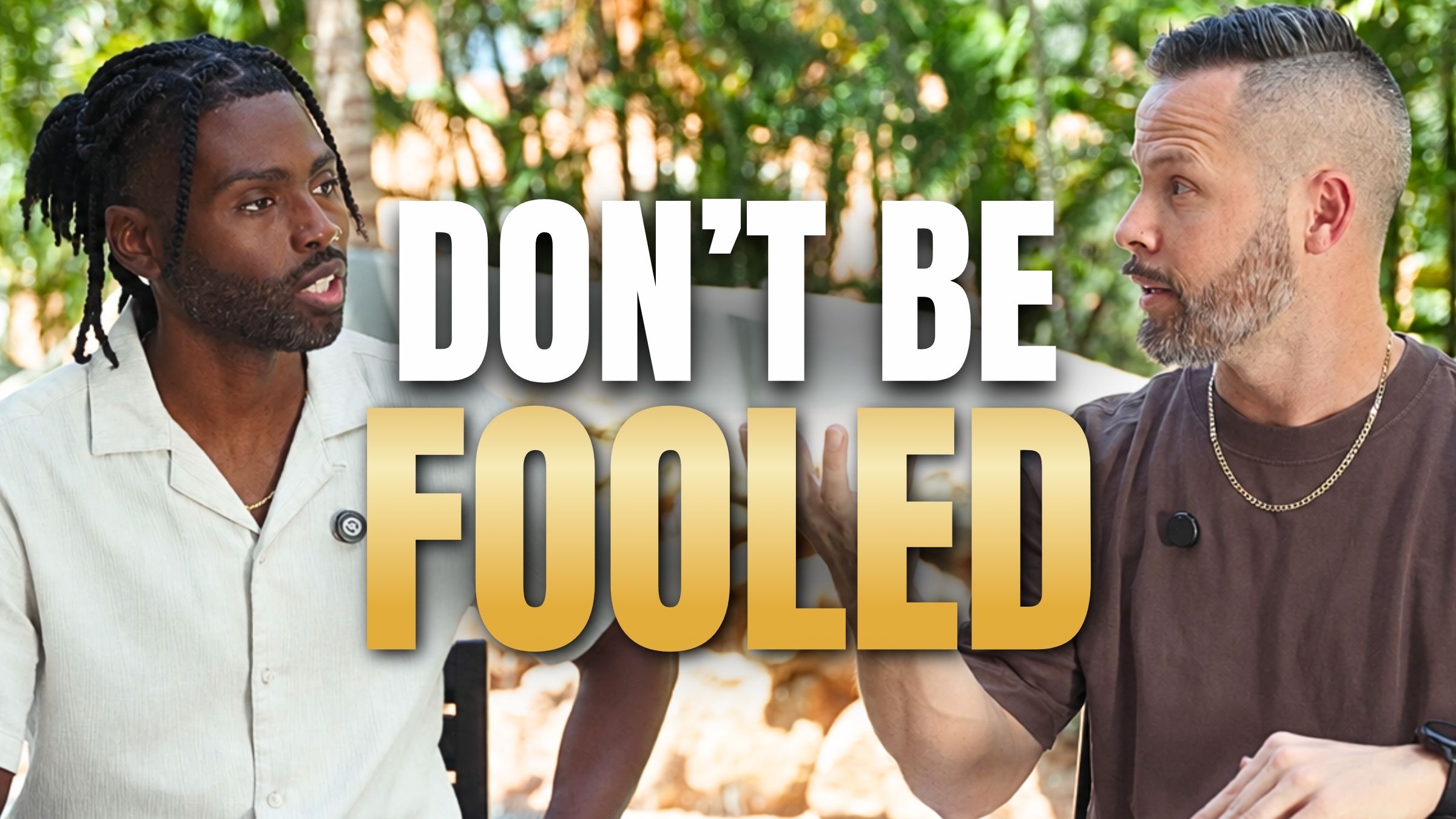
Why Coaches Shouldn’t Rely on Organic Marketing Alone
Why Relying on Organic Marketing Alone Could Be Limiting Your Business Growth
For coaches, consultants, and online experts, organic marketing can be an effective way to build an audience and establish credibility. Posting content, hosting webinars, and nurturing followers can generate meaningful results.
But what happens when those results become inconsistent?
You host a webinar that performs exceptionally well. The next week, sales decline. You run it again, and the numbers drop further. Eventually, what once worked seems to stop working altogether.
This pattern can leave business owners wondering whether their content, offer, or marketing strategy is the problem.
According to the perspective shared in the video, one major issue is relying too heavily on the same organic audience without consistently reaching new people. There are three key reasons to reconsider an organic-only approach: supply math, trust burn, and opportunity cost.
1. Organic Reach Is Becoming More Competitive
The first issue is what the speaker calls “supply math online.”
Every day, more businesses, creators, and individuals compete for attention on platforms such as Instagram, Facebook, and YouTube. As the volume of content increases, it becomes harder for any single account to maintain the same level of organic visibility.
The result is that even if your content remains valuable, your reach may become less consistent.
Why Organic Results Can Decline Over Time
A business might initially experience strong organic engagement because its audience is smaller, less saturated, or particularly responsive. But as more content enters the platform, the same posts may reach fewer people.
This can create a frustrating cycle:
You publish content consistently.
Your audience engages and attends your webinar.
Your initial sales are strong.
You repeat the same process.
Engagement and conversions gradually decline.
You struggle to reproduce the original results.
The issue is not necessarily that the content has become worse. It may be that the business is repeatedly relying on the same limited pool of attention.
The Shift Toward Paid Reach
Social media platforms are free to join, but their business models depend heavily on advertising. Paid ads allow businesses to reach people beyond their existing followers and put their products or services in front of new audiences.
The central idea is simple: if you want to grow consistently, you need a way to reach people who do not already know you.
Organic content can still play an important role in building trust and demonstrating expertise. The argument is not that organic marketing has no value, but that it may be risky to depend on it as the only growth engine.
2. Repeatedly Pitching the Same Audience Can Create Trust Burn
The second issue is what the speaker calls “trust burn.”
When a business repeatedly promotes the same offer to the same audience, people may become less responsive. Even an excellent product or service can lose its impact when the audience sees the same pitch over and over.
If followers have encountered the same offer dozens of times, the message may begin to feel repetitive rather than compelling.
Audience Familiarity Can Become Audience Fatigue
Repeated exposure is not always a bad thing. Consistent messaging can help people remember a brand. However, there is a difference between reinforcing a valuable message and repeatedly asking the same audience to buy the same thing without bringing in fresh attention.
Over time, this can lead to:
Lower engagement
Reduced webinar attendance
Fewer sales from existing followers
A perception that the brand is constantly selling
Less enthusiasm for the same promotional message
This is why businesses need to think beyond repeatedly presenting the same offer to the same people.
Warm Audiences Can Hide Offer Problems
Another important point from the video is that warm audiences can sometimes make an offer appear more effective than it actually is.
A warm audience already knows, likes, and trusts the business. These people may purchase because of their relationship with the creator, not necessarily because the offer has been fully validated with people unfamiliar with the brand.
That can create a misleading conclusion:
“My webinar converted well, so my offer must work for everyone.”
But when the same offer is presented to cold traffic, the results may be very different.
Cold audiences do not have the same history with the business. They need a clear reason to pay attention, trust the message, and take action.
The lesson: Strong results from an existing audience are valuable, but they should not automatically be treated as proof that an offer will perform equally well with new prospects.
3. The Opportunity Cost of Not Taking Action
The third and potentially biggest issue discussed in the video is opportunity cost.
Most business owners are familiar with operating costs:
Advertising expenses
Software subscriptions
Coaching or training
Team salaries
Other business investments
These costs are easy to see because they appear directly on a budget or bank statement.
Opportunity cost is different. It is the value of what you potentially lose by choosing not to take an action.
What Does Opportunity Cost Look Like in Marketing?
Imagine two coaches offering similar services.
One continues relying exclusively on an existing audience. The other begins learning how to use paid ads to reach new prospects.
Over time, the second coach may gain access to more potential customers, build a larger audience, and generate more opportunities to sell.
Meanwhile, the first coach may continue experiencing inconsistent results because the same audience is becoming less responsive.
The opportunity cost is not simply the money that could have been spent on ads. It may also include:
Missed leads
Lost sales
Slower brand growth
Missed market exposure
Customers who discover a competitor instead
Time spent trying to revive a declining promotional cycle
The video emphasizes that the cost of inaction can become significant when repeated over months or years.
Growth Requires New People or New Offers
The speaker presents a fundamental principle of scaling:
You can grow by selling the same thing to a new audience or selling a new thing to the same audience.
If a business chooses to market only to its existing audience, it may feel pressured to constantly create:
New courses
New programs
New webinars
New offers
New products
That approach can work, but it may also create unnecessary pressure to continually invent something new just to maintain sales.
Learning how to reach new audiences offers another path: continue improving and selling an existing offer while expanding the number of people who can discover it.
Why Paid Advertising Deserves Consideration
The video argues that paid advertising should be treated as an important business skill rather than something to avoid automatically.
For coaches, consultants, and experts, paid ads can help place an offer in front of people who are already spending time online but have not yet encountered the brand.
Instead of relying exclusively on followers to discover content, businesses can use advertising to intentionally reach new prospects.
Paid Ads Can Support a More Repeatable Growth Process
Organic marketing often depends on platform algorithms, audience behavior, content performance, and timing. Paid advertising introduces a more deliberate way to control who sees a message and how much exposure it receives.
That does not mean paid ads guarantee profitable results. Campaign performance still depends on factors such as:
The quality of the offer
The audience being targeted
The ad creative
The landing page or webinar
The sales process
The advertising budget
Ongoing testing and optimization
However, learning the skill can help businesses move beyond relying entirely on unpredictable organic reach.
How to Research What Other Businesses Are Advertising
The speaker specifically recommends using the Meta Ads Library to see what businesses are running.
The Meta Ads Library allows users to search for advertisers and view ads associated with their pages. This can be useful for observing how businesses position their offers, communicate benefits, and approach their advertising strategy.
You can explore it here: Meta Ads Library .
Rather than assuming what successful businesses do behind the scenes, researching their visible advertising activity can provide a more concrete picture of their marketing approach.
Paid Ads May Feel Overwhelming, But Skills Can Be Learned
One of the final points in the video is that many people avoid advertising because it seems too complicated.
Terms such as targeting, campaigns, audiences, budgets, creatives, and conversion tracking can make paid ads feel like a highly technical discipline.
But the speaker’s message is that the difficulty often comes from not having received the right training or guidance.
Learning paid advertising does not mean immediately spending large amounts of money. It means developing an understanding of the fundamentals, testing carefully, and building the ability to make informed decisions.
A practical starting point may include:
Understanding your ideal customer.
Clarifying the offer you want to promote.
Learning the basics of ad platforms.
Studying how successful advertisers position their offers.
Testing campaigns with a controlled budget.
Measuring results before increasing spending.
Improving the offer and marketing based on what the data shows.
The goal is not to abandon organic marketing. It is to avoid being dependent on one channel for all business growth.
Conclusion
Organic marketing remains useful for building credibility, nurturing relationships, and sharing valuable content. But relying on organic reach alone can create challenges as competition increases, audiences become fatigued, and existing promotional results become harder to repeat.
The three issues discussed in the video, supply math, trust burn, and opportunity cost, all point to the same broader lesson: sustainable growth requires a strategy for reaching new people.
Paid advertising is one way to expand beyond an existing audience and create more opportunities for an offer to be discovered. The key is to approach it as a skill to learn, not a shortcut that guarantees success.
If your business is experiencing inconsistent sales or declining webinar performance, it may be time to evaluate whether your current audience and marketing channels are giving you enough room to grow.
Call-To-Action
Ready to explore a more scalable approach to marketing?
Start by learning the fundamentals of paid advertising, researching how established businesses promote their offers, and identifying opportunities to reach new audiences. The right strategy can help you build on your existing organic efforts while creating additional paths for growth.
Want Help Learning Ads or Building Systems?
Attend The Profitable Ads Workshop 👇
https://profitableadsworkshop.com
The Most POWERFUL (And Simple) Facebook/Instagram Ads Course In The Game👇
https://www.richfromanywhere.com/accelerator
⭐️Money Back Guarantee Included⭐️
Apply To Work With RFA Directly👇
https://www.richfromanywhere.com/coaching
► Learn more about "Rich From Anywhere"
Website: https://www.richfromanywhere.com
Instagram: https://www.instagram.com/richfromanywhere
Tiktok: https://www.tiktok.com/@richfromanywhere
Direct Email: support@richfromanywhere.com
► Who Is Rich From Anywhere
RFA is your virtual marketing team that cares about the growth of your business just as much as you do. After 10 years of media buying, marketing for 7‑figure companies, and running our own online businesses, we've discovered a very specific marketing formula that produces results over and over again. We call it the RFA Method. Our proprietary RFA Method has already helped hundreds of online businesses, influencers, coaches, and educators grow their business and live a life of freedom doing what they love. Our passion is giving business owners the marketing tools they need to reach more people, make more sales, and as a result, change their life.


Rich From Anywhere, Inc. ™
© 2026 - All Rights Reserved